

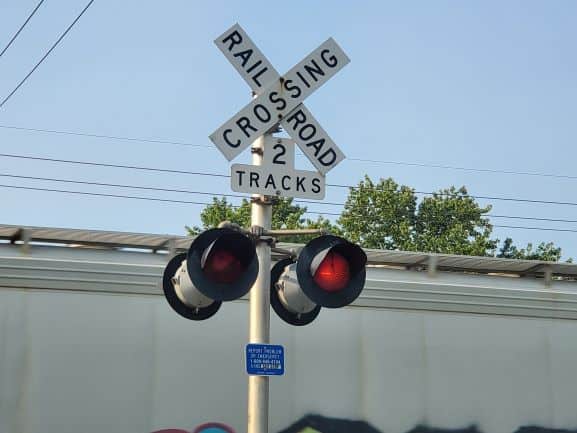
New data from a railroad crossing monitoring system in Elkhart County is revealing how often trains are blocking roadways and delaying traffic, while also highlighting a new tool helping drivers and emergency responders avoid those delays.
Since December 2024, cameras have tracked train activity at eight railroad crossings in Jackson Township, south of Goshen. The system has recorded hundreds of instances where crossings were blocked for more than 10 minutes.
Among the most impacted locations in 2025:
*County Road 50 recorded 305 blockages, totaling more than 163 hours, with an average delay of 32 minutes.
*County Road 42 saw 175 blockages lasting more than 152 hours, averaging 52 minutes each.
*County Road 29 experienced 84 blockages totaling nearly 61 hours, with an average delay of 44 minutes.
Other monitored crossings include U.S. 6, County Road 146, County Road 46 (Market Street), County Road 23 (Division Street), and County Road 142. In total, more than 3,300 trains moved through Jackson Township in 2025.
Elkhart County sits along one of the nation’s busiest freight rail corridors, with about 100 trains passing through daily. Many trains stretch beyond two miles, and some exceed three miles in length, contributing to extended blockages due to rail yard operations and federal safety requirements.
To address the issue, the county partnered with Goshen-based Blocked Crossings, LLC to install a camera and cloud-based monitoring system. The platform provides real-time updates on whether crossings are open or blocked.
The website, blockedcrossings.com, is averaging nearly 500 visits per day and is also being used by emergency responders to plan routes.
Residents say the tool is already making a difference.
“I commute to Middlebury for work every day, and the Blocked Crossings app consistently helps me plan my route to avoid delays,” said New Paris resident Gordon Bontrager.
County officials say the system cost includes initial infrastructure installation, with ongoing operating costs of about $100 per intersection per month. Data collected will help guide future decisions about expanding the program across Elkhart County and northern Indiana.
